
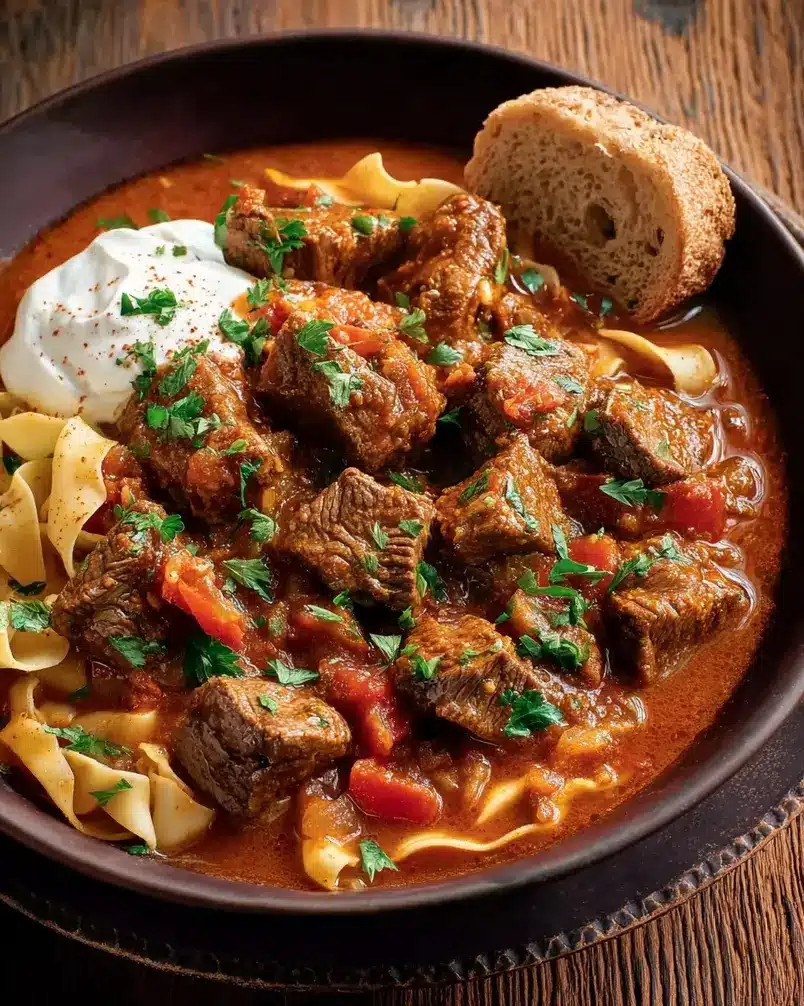
Hungarian Beef Goulash: A Taste of Tradition
Did you know that the hearty, comforting flavors of Hungarian Beef Goulash have been delighting palates for centuries? Many believe it’s just a stew, but true Goulash is a slow-cooked masterpiece where the beef’s richness meets the gentle warmth of paprika and spices. If you’re eager to discover the authentic taste of Hungarian Beef Goulash – a dish far more complex and rewarding than your average stew – then prepare for a culinary journey that will leave you craving more.

Ingredients List
* 2 lbs beef chuck, cut into 1-inch cubes (For a richer flavor, consider using beef brisket. For a leaner option use top sirloin.)
* 2 large onions, chopped (Red or yellow onions work well, but sweeter varieties like Vidalia can add a delightful twist.)
* 2 tbsp olive oil (Or any neutral-flavored oil like canola or sunflower.)
* 3 tbsp Hungarian sweet paprika (This is crucial for the authentic flavor! For a spicier kick, add a teaspoon of hot paprika.)
* 1 tbsp caraway seeds, ground (Freshly grinding the caraway seeds will release more flavor – try toasting them lightly before grinding.)
* 2 cloves garlic, minced (About 1 teaspoon.)
* 1 tsp marjoram, dried (Fresh marjoram can also be used – use about 1 tablespoon, chopped.)
* 1 (14.5 oz) can diced tomatoes, undrained (Fire-roasted tomatoes add a smoky depth.)
* 6 cups beef broth (Low-sodium broth allows you to control the salt level.)
* 2 medium potatoes, peeled and cubed (Russet potatoes are a classic choice, but Yukon Gold offer a creamier texture.)
* 1 red bell pepper, cored and chopped (Adds sweetness and color. Feel free to experiment with other colors like yellow or orange.)
* Salt and pepper to taste
* Optional: 1 tbsp tomato paste (Enhances the depth of the tomato flavor), sour cream or Greek yogurt for serving, fresh parsley for garnish
Timing
* Preparation Time: 25 minutes
* Cooking Time: 2 hours 30 minutes
* Total Time: 2 hours 55 minutes (Though it takes nearly 3 hours end to end, the active effort that goes into this recipe is limited to just 25 minutes; the rest of the time is spent allowing flavors to infuse and layers of richness to develop.)
Step-by-Step Instructions
Step 1: Sear the Beef
Heat olive oil in a large Dutch oven or heavy-bottomed pot over medium-high heat. Pat the beef cubes dry with paper towels, then sear them in batches until browned on all sides. This crucial step adds depth of flavor to your Hungarian Beef Goulash. Set the seared beef aside. Pro Tip: Don’t overcrowd the pot, as this will steam the beef instead of searing it. You’re aiming for a deep brown crust.
Step 2: Sauté the Aromatics
Add the chopped onions to the pot and sauté until softened and translucent, about 5-7 minutes. Incorporate the minced garlic and cook for another minute until fragrant. Expert Tip: If the pot becomes too dry, add a splash of beef broth to prevent burning.
Step 3: Bloom the Spices
Stir in the Hungarian sweet paprika and ground caraway seeds. Cook for 1 minute, stirring constantly, until fragrant. This step, referred to as “blooming,” releases the essential oils of the spices, enhancing their flavor. Chef’s Secret: Be careful not to burn the paprika, as it can become bitter. Keep the heat relatively low.
Step 4: Combine and Simmer
Return the seared beef to the pot. Add the diced tomatoes, beef broth, and marjoram. Season with salt and pepper to taste. Bring to a simmer, then reduce heat to low, cover, and cook for 2 hours, or until the beef is tender. Patience is Key: This slow simmering process is what transforms the beef into fall-apart tenderness. Don’t rush it!
Step 5: Add Vegetables
After 2 hours, stir in the cubed potatoes and chopped red bell pepper. Continue to cook for another 30 minutes, or until the potatoes are tender. Timing is Everything: Adding the potatoes and bell pepper later prevents them from becoming mushy.
Step 6: Adjust and Serve
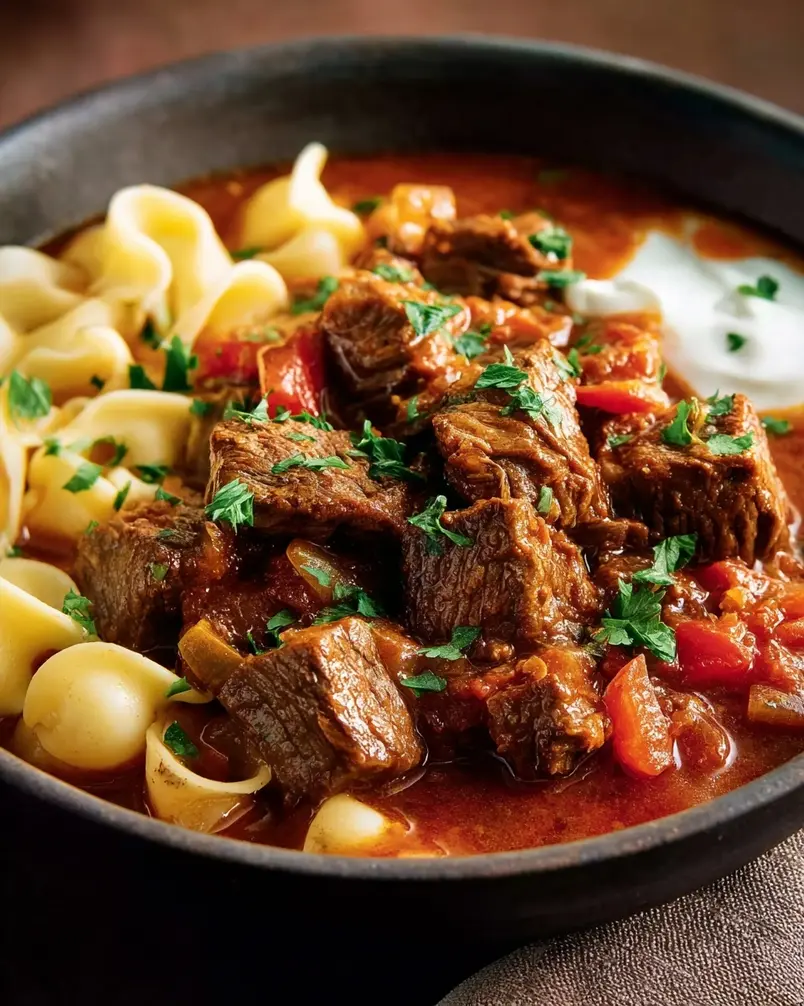
Taste and adjust seasoning as needed. If desired, stir in tomato paste for a deeper tomato flavor. Serve hot, garnished with a dollop of sour cream or Greek yogurt and fresh parsley. Make it Your Own: A squeeze of lemon juice can brighten the flavors just before serving.
Nutritional Information
(Per serving, approximately – may very significantly based on beef cut):
* Calories: 420
* Protein: 35g
* Carbohydrates: 25g
* Fat: 20g
* Fiber: 5g
* Vitamin A: 25% DV
* Vitamin C: 50% DV
* Iron: 30% DV
Healthier Alternatives for the Recipe
* Leaner Beef: Use top sirloin for a lower-fat option.
* Lower Sodium Broth: Opt for low-sodium beef broth to control salt intake.
* More Vegetables: Add more vegetables like carrots, celery, or mushrooms to boost nutrient content.
* Dairy-Free: Substitute coconut yogurt for sour cream.
* Thickeners: Instead of thickening with a roux, which adds extra fat, consider mashing some of the potatoes into the stew.
* Avoid Added Sugar: Some recipes may add sugar. It isn’t necessary!
Serving Suggestions
* Classic Pairing: Serve with egg noodles (spaetzle), mashed potatoes, or crusty bread for soaking up the flavorful sauce.
* Modern Twist: Top with a dollop of herbed ricotta cheese or a sprinkle of crumbled feta for a tangy contrast.
* Garnish: Fresh dill, chives, or a swirl of olive oil add visual appeal and enhance the aroma.
* Side Dish: A crisp green salad with a light vinaigrette provides a refreshing counterpoint to the rich stew.
* Wine Pairing: A medium-bodied red wine like Pinot Noir or a dry rosé complements the flavors of the Goulash.
* Family-Style: Serve in a large earthenware bowl for a rustic, communal dining experience.
Common Mistakes to Avoid
* Not Searing the Beef: Searing the beef adds a crucial layer of flavor. Don’t skip this step!
* Burning the Paprika: Paprika can burn easily, becoming bitter. Keep the heat low when blooming the spices.
* Overcrowding the Pot: Overcrowding the pot when searing the beef will result in steaming instead of browning. Sear in batches.
* Rushing the Simmering Process: Patience is key! Slow simmering is essential for tenderizing the beef and developing the flavors.
* Underspicing: Don’t be afraid to season generously. Salt and pepper are your friends!
* Overcooking the Vegetables: Add potatoes and bell peppers later in the cooking process to prevent them from becoming mushy.
Storing Tips for the Recipe
* Refrigerate: Store leftover Hungarian Beef Goulash in an airtight container in the refrigerator for up to 3-4 days.
* Freeze: For longer storage, freeze in an airtight container for up to 2-3 months. Thaw in the refrigerator overnight before reheating.
* Reheating: Reheat gently on the stovetop over medium heat, or in the microwave. Add a splash of broth or water if needed to retain moisture.
* Make-Ahead: Goulash is often even better the next day, as the flavors meld together even more. You can certainly prepare it a day in advance!
* Ingredient Prep: Chop the vegetables and portion out the spices ahead of time to streamline the cooking process.
Conclusion
Hungarian Beef Goulash is more than just a recipe; it’s a comforting embrace that echoes through generations. With its rich flavors, tender beef, and heartwarming aroma, this dish is perfect for cozy evenings and gatherings with loved ones. Now that you’re armed with the knowledge and tips to create this at-home masterpiece, why not give it a try? Share your culinary adventures with us – we can’t wait to hear about your delicious creations!
FAQs
1. Can I make this in a slow cooker?
Yes, you can! Sear the beef as directed, then transfer all ingredients (except the potatoes and bell pepper) to a slow cooker. Cook on low for 6-8 hours. Add the potatoes and bell pepper during the last 1-2 hours of cooking.
2. I don’t have Hungarian paprika. Can I use regular paprika?
While regular paprika will work in a pinch, Hungarian sweet paprika is crucial for the authentic flavor of Goulash. It has a distinct sweetness and depth that other types of paprika lack. Try to find it online or at a specialty spice store.
3. Can I add other vegetables?
Absolutely! Carrots, celery, parsnips, and mushrooms are all excellent additions to goulash.
4. How can I thicken the Goulash if it’s too thin?
You can add a cornstarch slurry (1 tablespoon cornstarch mixed with 2 tablespoons cold water) to the stew during the last 30 minutes of cooking. Alternatively, mash some of the potatoes into the sauce to thicken it naturally.
5. Can I make this vegetarian or vegan?
To make a vegetarian or vegan version, substitute the beef with mushrooms or a hearty vegetable like butternut squash. Use vegetable broth instead of beef broth.
6. What’s the difference between Goulash and Beef Stew?
While both are braised beef dishes, Goulash is uniquely defined largely by its generous use of paprika combined with caraway and sometimes marjoram or thyme. Goulash also often contains Hungarian wax peppers. Beef stew is much more variable in its spicing.
7. My Goulash tastes bland. What did I do wrong?
Check that you’ve used enough paprika and caraway seeds, as these are the signature flavors. Are you using fresh spices? How much salt and pepper have you used? Tasting is critical!